Can Eczema Be Cured? Myths vs Facts
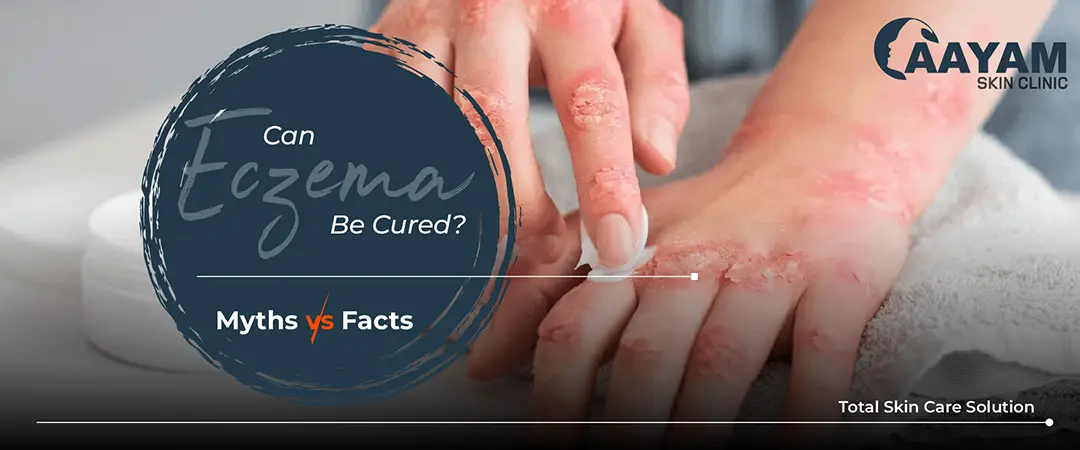
If you have eczema, you may have noticed a frustrating pattern. Your skin gets better, stays fine for a few days or weeks, and then the itching and dryness come back. Sometimes you know what caused it. Other times, the flare-up seems to appear for no clear reason.
That is why one of the first questions people ask is, “Can eczema be cured permanently?”
At present, there is no medicine or cream that can promise an eczema permanent cure for every person. But that does not mean you have to live with constant itching and rashes. Many people keep eczema under control by knowing what sets it off, caring for dry skin, and using the right treatment when a flare starts.
Can Eczema Be Cured? Myths vs Facts You Need to Know
There is plenty of confusing advice about eczema. You may hear that it happens because of poor hygiene, that it spreads by touch, or that a particular oil can cure it forever. These claims tend to obscure eczema.
Here are some common myths.
Myth: Eczema Can Be Permanently Cured With One Cream
Fact: A cream can settle a flare-up, but it cannot guarantee that eczema will never return.
Eczema can come and go. Some may not have symptoms for months or even years, while others have frequent flare-ups.
What they want to do is make those flare ups less frequent and less troublesome. This could be using moisturizers, prescribed creams, avoiding things that irritate your skin and changing a few everyday habits.
Myth: Eczema Spreads by Touch
Fact: Eczema is not contagious.
You will not catch it by touching someone, sharing a towel, sitting beside them, or using the same household items.
However, scratched eczema can sometimes become infected. An infection is different from eczema itself and may need separate treatment.
Myth: Eczema Means You Are Not Keeping Your Skin Clean
Fact: Eczema has nothing to do with being dirty.
In fact, washing too often can leave eczema-prone skin even drier. Hot water, strong soap, body washes, perfumes, and frequent scrubbing may remove oils that help protect the skin.
Eczema Meaning in English: What Exactly Is Eczema?
If you are searching for eczema meaning in Hindi, the easiest English explanation is this: eczema is a problem in which the skin becomes dry, itchy, inflamed, cracked, or rough.
In many people with eczema, the outer layer of the skin does not hold moisture as well as it should. The skin dries out more easily and is sensitive to things that may not bother someone else's skin.
You may notice:
- Constant or repeated itching
- Very dry or flaky skin
- Red or darker patches
- Rough areas
- Cracked or sore skin
- Tiny bumps
- Thick skin where you scratch repeatedly
Eczema may occur on the hands, face, neck, elbows, knees, feet, or other parts of the body.
Dermatitis Causes: Why Does Eczema Keep Coming Back?
When people search for dermatitis causes, they often expect to find one exact reason. It is usually not that simple.
Family history can play a part. The way your skin holds moisture also matters. On top of that, everyday things can bring on a flare.
Common triggers include soap, detergent, perfume, dust, sweat, woollen clothes, heat, cold weather, dry air, and some cosmetic products. Stress may also make itching worse in some people.
One useful habit is to notice what happened before each flare. Did you change your soap? Use a new perfume? Sweat heavily? Wear a rough fabric? Spend a long time in hot water?
Finding that pattern can be more useful than changing creams every few days.
Eczema Around Lips: What Can Cause It?
Eczema around the lips deserves extra attention because the skin around the mouth is easily irritated.
You may see dry, peeling skin around the lips, along with redness, itching, small cracks, or a burning feeling. Lip licking is a common problem because saliva can leave the area even drier once it evaporates.
Lipsticks, lip balms, toothpaste, face creams, fragrances, and other products that touch the mouth can also cause irritation in some people.
If the problem keeps returning, do not keep trying a different cream every week. A dermatologist can check whether you have eczema, contact dermatitis, or another problem around the mouth.
Is There a Best Ayurvedic Cream for Eczema?
The search for the best Ayurvedic cream for eczema is common, especially among people who have already tried several products.
But “herbal” or “natural” does not mean that a cream will suit every skin type. Essential oils, fragrances, herbs, and plant extracts can irritate already sore skin.
If you want to try an Ayurvedic product, check what is in it first. Be particularly careful when applying a new product to the face, around the eyes, or around the lips.
Also, be cautious of any product that promises an eczema permanent cure. Eczema does not work the same way in every person, so one cream cannot reasonably promise the same result for everyone.
What Can You Do When Eczema Flares Up?
Start with the basics. Keep showers short and use lukewarm rather than very hot water. Do not scrub itchy areas. Pat the skin dry and apply a suitable moisturiser while the skin is still slightly damp.
Try to avoid products that you already know make your skin sting or itch. Soft clothes are usually more comfortable than rough fabrics when the skin is irritated.
Most importantly, try not to scratch. It may give relief for a few seconds, but repeated scratching can break the skin and make the itching worse.
For repeated or troublesome eczema, a dermatologist may prescribe treatment according to where the eczema is, how much skin it covers, and how severe the flare is.
Eczema, Skin Allergy, Skin Rashes or Psoriasis?
An itchy patch does not automatically mean eczema.
Skin Allergy may appear after your skin comes into contact with something it reacts to. Skin Rashes can have many causes, including irritation, allergy, infection, heat, and other skin problems. Psoriasis can also cause thick, scaly patches but is different from eczema.
Changes in skin colour may raise questions about Leukoderma/Vitiligo, which is another separate skin condition.
This is why getting the right name for the problem matters. Using an eczema cream on every rash may not solve the actual cause.
When Is It Time to See a Dermatologist?
If the itching continues to disturb your sleep, the rash recurs, the skin becomes painful, or the area begins to spread, make an appointment.
Yellow crust, pus, warmth, swelling or increasing pain are signs of infection and should not be ignored.
At Aayam Skin Clinic, Dr. Abhilasha Patidar can check the affected skin, ask about your symptoms and possible triggers, and decide what type of care may suit the problem.
The clinic also covers concerns such as Pimples Its Marks & Scars, Dark Circles, Hairfall/Baldness, Skin Allergy, Skin Rashes, Psoriasis, and Leukoderma/Vitiligo.
Other available skin and hair procedures include Dermaroller Therapy for Acne Scars and Stretch Marks, Mezo Therapy, Laser Hair Reduction, Hydra Facial/Medi Facial, and Various Treatments for Hair Growth. These are separate treatments and should be linked to their relevant pages rather than presented as eczema treatments.
FAQs
Can eczema be cured permanently?
At present there is no definite cure permanently. But if triggers and flare-ups are managed well, eczema can be quiet for long stretches.
What are the most common dermatitis causes?
Soap, detergents, fragrances, sweat, weather, rough clothing, dry skin, and certain products may trigger dermatitis in some people.
Why do I get eczema around lips?
Lip licking, toothpaste, cosmetics, lip products, fragrances, and contact irritation are some possible reasons.
Is Ayurvedic cream good for eczema?
It depends on the ingredients and your skin. Even herbal ingredients can irritate sensitive skin, so avoid choosing a product only because it says “natural.”
Can eczema and psoriasis look similar?
Yes. Both can cause itchy, inflamed or scaly skin but they are different conditions. A dermatologist can tell them apart.