Postpartum Hair Loss: Causes, Treatment & What to Expect
You have just had a baby, and now your hair seems to be falling out more than ever. Every time you wash your hair, you find loose strands in your hands. Your hairbrush fills up quickly, and the hair near your forehead looks thinner than before.
If this sounds familiar, you may be experiencing postpartum hair loss. Many women notice this problem shortly after delivery. It can be worrying, particularly if you don’t understand why it’s happening. In most cases, though, the hair grows back without any special treatment.
Postpartum Hair Loss: Causes, Treatment & What to Expect After Childbirth
You might remember how thick your hair looked during pregnancy. Your body was producing more estrogen, a hormone that kept more hair in its growing stage. Because fewer strands fell out, your hair appeared fuller.
Once your baby arrives, estrogen levels drop. The hair that stayed on your head during pregnancy begins to shed.
Doctors call this condition telogen effluvium. It isn't the same as permanent baldness. Your hair follicles remain active, and new strands continue growing.
Hair thinning in some women occurs near the temples, in others it occurs evenly over the entire scalp.
When Does Postpartum Hair Loss Start?
Most women begin noticing extra hair fall around two or three months after delivery. For some, it starts a little later.
Here's what you might experience:
- First two months: Your hair may still look thick.
- Third month: More hair comes out while washing or brushing.
- Fourth month: Hair shedding often reaches its highest point.
- Fifth and sixth months: Hair fall usually begins slowing down.
- Six to twelve months: New hair becomes more noticeable, and your hair gradually looks fuller.
Wondering how long does postpartum hair loss last? The heavy shedding generally lasts less than six months. Most women regain their usual hair fullness by their baby's first birthday.
Why Does Hair Fall Increase After Pregnancy?
The biggest reason for hair loss after pregnancy is hormones, but they are not always the only reason.
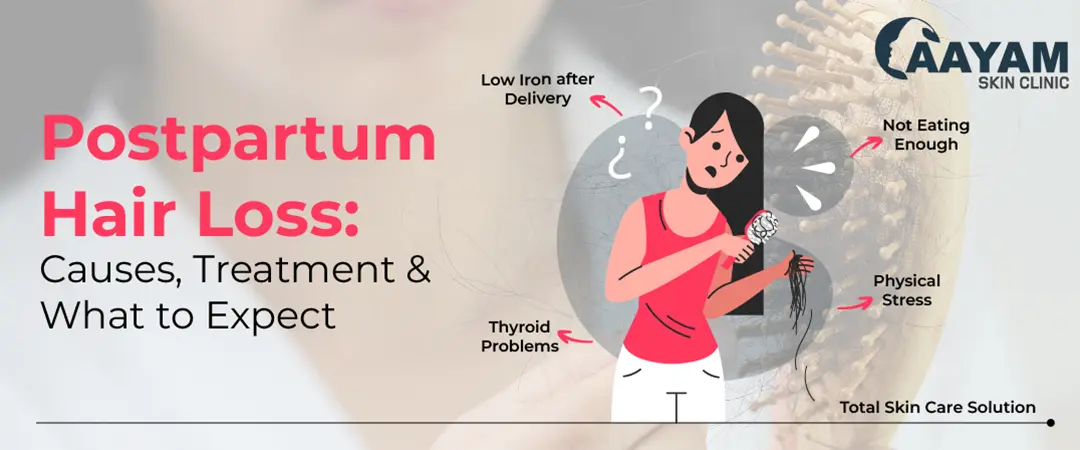
Low Iron After Delivery
Some women lose a considerable amount of blood during childbirth. This can leave their iron levels low, which may contribute to hair shedding.
Thyroid Problems
Your thyroid helps control several body functions, including hair growth. Thyroid problems sometimes appear after pregnancy and may cause continued hair fall.
Not Eating Enough
Caring for a newborn can make regular meals difficult. If your body doesn't get enough protein, iron, or other nutrients, your hair may suffer.
Physical Stress
Childbirth, illness, sudden weight loss, and other physical changes can affect the hair growth cycle. These factors may add to the shedding you already experience after delivery.
Postpartum Hair Loss Treatment: What Can Actually Help?
If you're searching for how to stop postpartum hair loss, remember that normal hormonal shedding cannot disappear overnight.
However, a few changes can help you care for your hair while it grows back.
- Pay attention to your meals
Eat foods such as eggs, dal, paneer, leafy vegetables, beans, and nuts. Don't start iron tablets or other supplements unless your doctor recommends them.
- Wash your hair when needed
You don't have to avoid washing your hair because it's falling out. The loose strands you see during washing were already ready to shed.
- Use a shampoo that suits your scalp
There is no single best shampoo for postpartum hair loss. A gentle shampoo can clean your scalp, while a volumizing product may make thin hair look fuller. Neither can stop hormonal shedding.
- Keep hairstyles loose
Tight ponytails, buns, and braids pull at your roots. Loose hairstyles can help prevent additional damage.
- Avoid unnecessary hair treatments
Frequent straightening, bleaching, and chemical treatments may weaken your hair. Try to limit them while your hair is recovering.
When Will Postpartum Hair Regrowth Begin?
New strands often start growing while older hair is still shedding. You may first notice tiny hairs around your forehead or hairline.
These short hairs are often a welcome sign of regrowth, but styling can be tricky.
Hair grows slowly so it takes time for the hair to regrow after delivery. Even after shedding stops, your hair may need several more months to regain its previous fullness.
When Should You Visit a Dermatologist?
See a dermatologist if your hair keeps shedding heavily for more than six months, you develop bald patches, or your hair hasn't improved by your baby's first birthday.
A doctor may check your scalp and recommend blood tests for iron deficiency or thyroid problems.
If you are facing hair fall after pregnancy then you can consult Aayam Skin Clinic.If you are losing hair, a dermatologist can determine if it is normal postpartum hair loss or if it needs to be investigated.
Frequently Asked Questions
1. Why am I losing so much hair after giving birth?
Estrogen levels fall after childbirth. This causes the extra hair retained during pregnancy to shed.
2. How long does postpartum hair loss usually last?
Heavy shedding generally lasts less than six months. Most women regain their usual hair fullness within a year.
3. Can breastfeeding make postpartum hair loss worse?
Breastfeeding itself isn't the main cause. Hormonal changes after delivery usually explain the hair fall.
4. Are hair loss medicines safe while breastfeeding?
It depends on the medicine. Ask your doctor before using minoxidil or taking supplements for hair loss.
5. Can I prevent postpartum hair loss completely?
No. You cannot fully prevent hormonal shedding, but proper nutrition and gentle hair care can help protect your existing hair.